
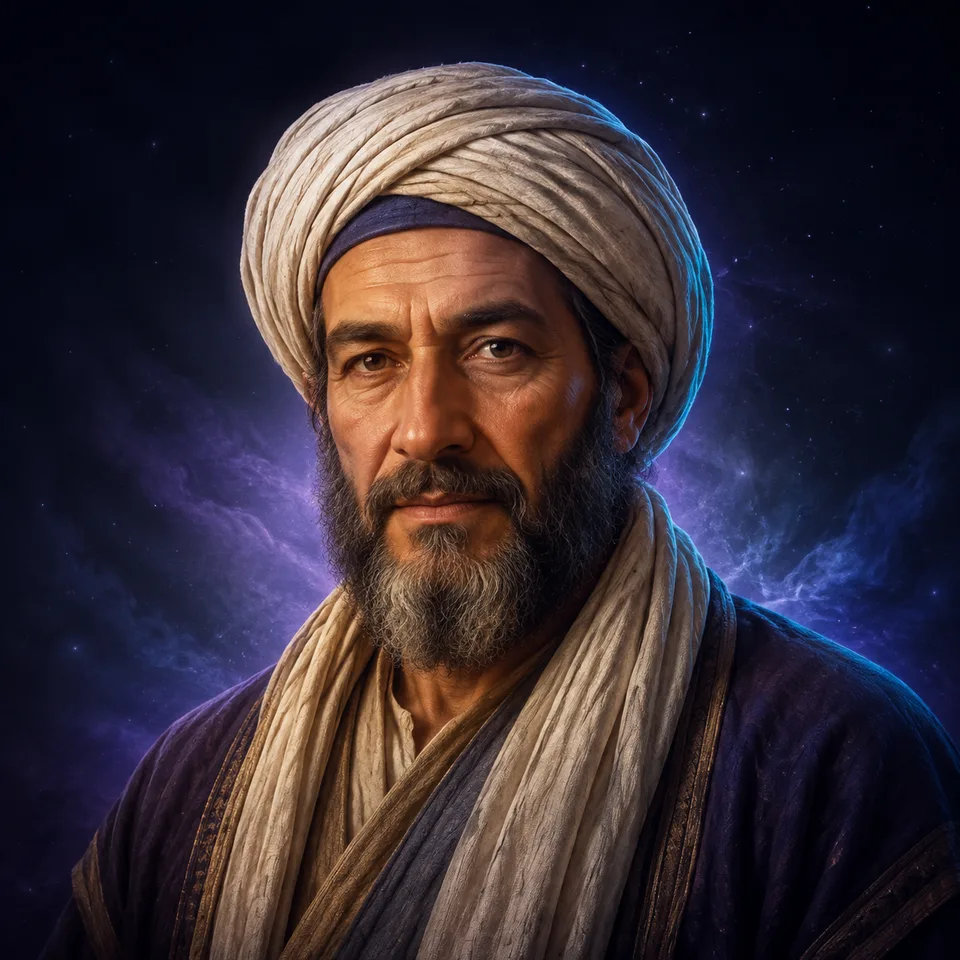
Muhammad ibn Sirin
c. 654, Basra — 728, Basra
Biography
Muhammad ibn Sirin grew up in Basra during the first Islamic century and became known as a transmitter of reports, jurist, merchant, and ascetic. Medieval biographical literature remembers his wit, caution, and ability to read a questioner’s circumstances before answering.
His later fame as the pre-eminent Muslim dream interpreter is larger than the securely documented record. Stories of his interpretations circulated for centuries, while the popular printed dream dictionaries bearing his name were compiled much later. Modern scholarship therefore distinguishes the historical Ibn Sirin from the evolving literary tradition attributed to him.
Muhammad ibn Sirin must be understood within a specific historical setting rather than as a timeless voice detached from institutions, languages, and debates. The surviving chronology places this basran scholar of the successor generation between c. 654, Basra and 728, Basra. Those dates matter because ideas about dreams changed with medicine, theology, philosophy, publishing, and the audiences for whom books were written. A responsible biography therefore separates evidence contemporary with the subject from later anecdotes, popular legends, translations, and commercial editions that may have enlarged the person’s reputation.
The intellectual career associated with Muhammad ibn Sirin cannot be reduced to dream interpretation alone. The biographical record shows how education, professional networks, patrons, patients, students, religious communities, or scholarly disputes shaped the questions that became important. Even when later readers remember one famous theory, the original work belonged to a wider programme of inquiry. Reading that career in sequence helps explain why concepts changed over time and why a mature publication should not automatically be projected backward onto every earlier stage of the author’s life.
The principal works preserved or associated with this profile include Taʿbīr al-Ruʾyā (lost/uncertain attribution)؛ Muntakhab al-Kalām fī Tafsīr al-Aḥlām. Titles alone, however, do not establish what the author believed. Their publication dates, genres, intended readers, manuscript transmission, editorial history, and translations all affect interpretation. In this case, the accompanying bibliographical record notes: An early title reported in bibliographic tradition. A much later compilation traditionally attributed to him. Comparing editions and scholarly catalogues is especially important when attribution is uncertain or when a work became famous through a translation that used a vocabulary different from the original language.
Muhammad ibn Sirin’s approach to dreams is best described as a method, not a list of interchangeable symbols. Reports associated with Ibn Sirin connect an image with Qur’anic language, prophetic reports, proverbs, names, occupations, time, and the dreamer’s moral and social circumstances. They do not support a mechanical one-symbol/one-meaning code. This distinction prevents a common error: taking a single image out of its narrative and assigning it a universal verdict. The dreamer’s circumstances, sequence of events, emotion, language, and response may change the reading. Historical methods can be studied seriously without treating them as experimentally proven, while psychological methods can inform reflection without turning a dream into a clinical diagnosis.
Reception is part of the biography because later generations continually reconstructed Muhammad ibn Sirin. Students, editors, clinicians, religious scholars, artists, and popular publishers selected different parts of the legacy. Ibn Sirin became a symbol of careful Islamic oneiromancy. Attribution must remain explicit: Muntakhab al-Kalam and many modern dictionaries cannot simply be treated as books personally written by him. The result is both influence and distortion: memorable labels often travel farther than the qualifications in the original works. This page therefore uses named reference points—TDV İslâm Ansiklopedisi — İbn Sîrîn؛ M. Mavroudi, A Byzantine Book on Dream Interpretation (Brill)—so readers can distinguish documented biography from interpretation. Sources themselves may disagree, and that disagreement should be shown rather than concealed behind a simplified heroic story.
Approach to dreams
Reports associated with Ibn Sirin connect an image with Qur’anic language, prophetic reports, proverbs, names, occupations, time, and the dreamer’s moral and social circumstances. They do not support a mechanical one-symbol/one-meaning code.
Principal works
- Taʿbīr al-Ruʾyā (lost/uncertain attribution) — An early title reported in bibliographic tradition.
- Muntakhab al-Kalām fī Tafsīr al-Aḥlām — A much later compilation traditionally attributed to him.
Legacy and limits
Ibn Sirin became a symbol of careful Islamic oneiromancy. Attribution must remain explicit: Muntakhab al-Kalam and many modern dictionaries cannot simply be treated as books personally written by him.
✦ Key Dream Symbols & Archetypes
Prominent dream images and archetypes central to this thinker’s interpretive methodology: