

Is There Scientific Evidence for Dream Interpretation?
What empirical sleep research, memory consolidation trials, and continuity hypothesis studies actually reveal about dream content versus symbolic overclaims.
A curated academic and psychological knowledge cluster bridging empirical sleep neuroscience, cognitive memory consolidation, historical semiotics, and contextual reflection.
Memory consolidation, REM/NREM stages, and testable neural mechanisms.
How daily experiences, emotional concerns, and relationships shape nocturnal narratives.
Why classical masters and modern scientists agree: symbols lack fixed universal codes.
Computational narrative exploration without deterministic diagnostic overclaims.
Do dream symbols have universal meanings? Explore how classical interpretations, psychology, and modern dream research differ from one-size-fits-all dream dictionaries.
Read Full Pillar Article → What empirical sleep research, memory consolidation trials, and continuity hypothesis studies actually reveal about dream content versus symbolic overclaims.

Why identical dream images carry radically different psychological meanings, and how waking memories, emotional states, and culture shape nocturnal motifs.

Why commercial A-to-Z dream books oversimplify human experience, and how moving from fixed dictionary definitions to contextual exploration provides genuine clarity.
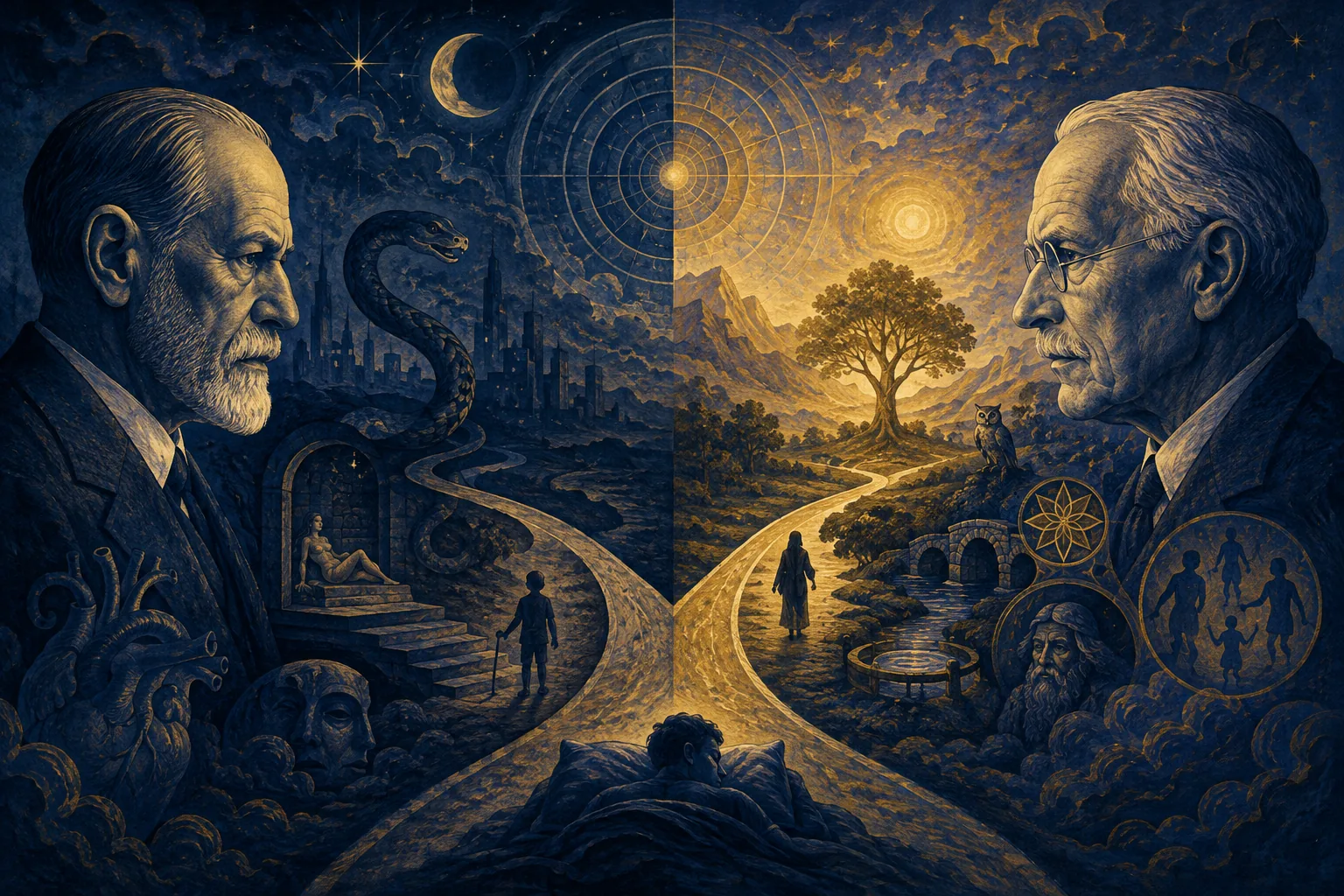
Contrasting Freud’s wish-fulfillment psychoanalysis, Jung’s archetypal analytical psychology, and contemporary cognitive neuroscience awakenings.

What large language models can realistically analyze across dream narratives, where automated diagnostic dangers lie, and why responsible AI preserves uncertainty.
Razita pairs traditional semiotic frameworks with modern cognitive reflection. Rather than delivering rigid predictions, our conversational simulator helps you formulate hypotheses connecting dream narratives with waking emotions.