Freud vs Jung vs Modern Dream Science
Compare Freud's dream theory, Jung's symbolic approach and modern empirical dream research. See what each framework claims—and what science can actually test.
Sigmund Freud and Carl Jung are probably the two names most closely associated with psychological dream interpretation.
Yet neither man's approach is identical to what scientists mean today by dream research.
Freud, Jung, and modern sleep science ask overlapping questions, but they use different assumptions and different methods to answer them. As demonstrated in our analysis of why dream symbols do not have one universal meaning, moving from speculative archetypes to empirical observation requires strict methodological discipline.
Understanding those differences prevents an important mistake: treating influential psychological theories as though they were equivalent to experimentally established facts.
Freud: Dreams and Hidden Wishes
Freud's The Interpretation of Dreams, published around the beginning of the twentieth century, made dreams central to psychoanalytic theory.
A major distinction in Freud's framework was between:
manifest content — the dream as remembered;
and
latent content — the underlying wishes, conflicts, or ideas presumed to contribute to it.
Freud proposed processes through which latent material could be transformed into the strange narrative experienced in a dream.
His approach placed great emphasis on the individual dreamer's associations.
This is important because popular “Freudian” dream dictionaries sometimes oversimplify Freud himself. Psychoanalytic interpretation was not simply a system in which every object had one fixed translation.
Nevertheless, many of Freud's broader claims are difficult to test using the standards of modern experimental science.
Reviews comparing psychoanalytic dream theory with empirical research continue to debate where Freud's observations remain useful and where evidence does not support stronger theoretical claims.
Jung: Symbols, Compensation and Archetypes
Carl Jung initially worked closely with Freud but later developed a substantially different psychological framework.
Jung gave symbolic imagery a particularly important role.
He proposed that dreams could sometimes compensate for attitudes or imbalances in conscious life and explored the idea that certain symbolic patterns could have archetypal significance.
Jungian analysis therefore often asks what a dream image might represent within the development of the whole personality. In the psychology of dream symbols, Jungian amplification remains an evocative heuristic for personal reflection rather than a validated diagnostic test.
This framework has had enormous cultural influence.
However, claims about archetypes and symbolic meanings should be distinguished from observations that can be directly measured in laboratory dream research.
What Modern Dream Science Does Differently
Modern dream research usually begins with questions that can be operationalized.
Researchers may ask:
- How often are waking experiences incorporated into dreams?
- How does dream content vary across individuals?
- What happens when people are awakened from different sleep stages?
- How are memories represented in dreams?
- Does dreaming about a learned task correlate with later memory performance?
- How do nightmares differ from ordinary dreams?
- What neural activity accompanies dreaming?
This creates a very different research program.
Instead of starting with:
What hidden message is this dream communicating?
a laboratory study investigating what modern research actually supports might ask:
Is information learned before sleep statistically more likely to appear in later dream reports?
Modern Evidence: Waking Life Appears in Dreams
One important area of evidence is continuity between waking and dreaming.
Research indicates that waking-life activities, concerns, and emotions can influence subsequent dream content.
This may sound superficially compatible with parts of Freud or Jung.
But compatibility is not the same as confirmation.
Finding that emotionally important waking experiences appear in dreams does not prove Freud's entire theory of latent wish fulfillment.
Nor does it establish Jung's theory of archetypes.
It establishes the specific relationship that the study actually measured.
Modern Evidence: Dreams and Memory
Another major research area concerns memory consolidation.
Studies show that experiences learned while awake can influence later dream content.
A 2023 meta-analysis found a significant association between dreaming about a learning task and improved memory performance after sleep.
Researchers have therefore proposed that dreaming may sometimes reflect memory reactivation or reorganization occurring during sleep.
Again, this finding is interesting precisely because it does not require a universal symbolic code.
The dream may be related to personal memory processes.
Modern Evidence: Emotion Matters
Dream reports frequently contain emotional material.
REM dreams in particular can be vivid and emotional, although dreaming is not restricted to REM sleep.
Research continues to investigate relationships among sleep stages, emotion regulation, memory and dream experience.
This creates another possible point of contact with older theories, which often emphasized emotionally charged material.
But modern research remains cautious about moving from:
dreams contain emotional material
to:
this particular image has this particular hidden emotional meaning.
Freud vs Jung vs Modern Research
Freud
Main emphasis: Unconscious conflict, wishes, latent and manifest content.
Method: Clinical interpretation and free association.
Strength: Placed personal history and psychological association at the center of dream discussion.
Scientific limitation: Many theoretical claims are difficult to falsify or experimentally isolate.
Jung
Main emphasis: Symbols, compensation, psychological development, archetypal patterns.
Method: Analytical interpretation, amplification and personal/cultural symbolism.
Strength: Recognizes that a dream image may carry multiple layers of personal and cultural association.
Scientific limitation: Universal archetypal interpretations are difficult to establish empirically.
Modern dream science
Main emphasis: Dream phenomenology, memory, emotion, sleep stages, waking-life continuity, neural processes and measurable patterns.
Method: Experiments, dream diaries, longitudinal studies, awakenings in sleep laboratories, neurophysiology and statistical analysis.
Strength: Produces testable evidence.
Limitation: Science still does not have a complete explanation of why we dream or how subjective meaning emerges.
Research reviews continue to describe fundamental questions about dream generation and function as unresolved.
Are Freud and Jung “Wrong”?
That question is too simple.
A theory can be historically important, clinically influential, philosophically interesting, or personally useful without every part of it being experimentally established.
The more useful distinction is:
What is a theory? and What has empirical evidence directly demonstrated?
Freud and Jung offer interpretive frameworks. Modern dream research offers experimentally testable findings.
Those categories can inform one another, but they should not be collapsed into a single claim of scientific certainty.
What Does This Mean for Your Own Dreams?
You do not have to choose between:
“Every dream has a secret code.”
and
“Dreams are meaningless noise.”
There is a middle position.
Dreams can contain material connected with memory, emotions, personal experience and current concerns while still being difficult to translate into one objectively correct interpretation.
That is why contextual exploration makes more sense than automatic symbolic decoding. To explore this topic further, navigate our comprehensive Dream Science Hub.
Explore Different Perspectives With Razita
When exploring a dream, you can ask several different questions:
- What might this image mean personally?
- Is there an obvious waking-life connection?
- What emotion dominates the dream?
- Is there a traditional interpretation?
- How would a Jungian interpretation differ?
- What can modern research actually support?
Keeping those layers separate makes dream exploration more informative—and more honest. You can test multi-framework interpretations directly in our conversational dream simulator.
Suggested references
- Roesler C. Dream interpretation and empirical dream research — an overview of research findings and their connections with psychoanalytic dream theories. International Journal of Psychoanalysis. 2023. DOI: 10.1080/00207578.2023.2184268.
- Ruby PM. Experimental research on dreaming: state of the art and neuropsychoanalytic perspectives. Frontiers in Psychology. 2011. DOI: 10.3389/fpsyg.2011.00286.
- Wamsley EJ. Dreaming and offline memory consolidation. Current Neurology and Neuroscience Reports. 2014. DOI: 10.1007/s11910-013-0433-5.
- Hudachek L, Wamsley EJ. A meta-analysis of the relation between dream content and memory consolidation. Sleep. 2023. DOI: 10.1093/sleep/zsad111.
Experience Your Own Dream Analysis
Connect your nocturnal visions with the scientific insights of Freud, Jung, and classical interpreters. Test Razita's conversational simulator right now.
✦ Interpreters & Schools Discussed in this Article
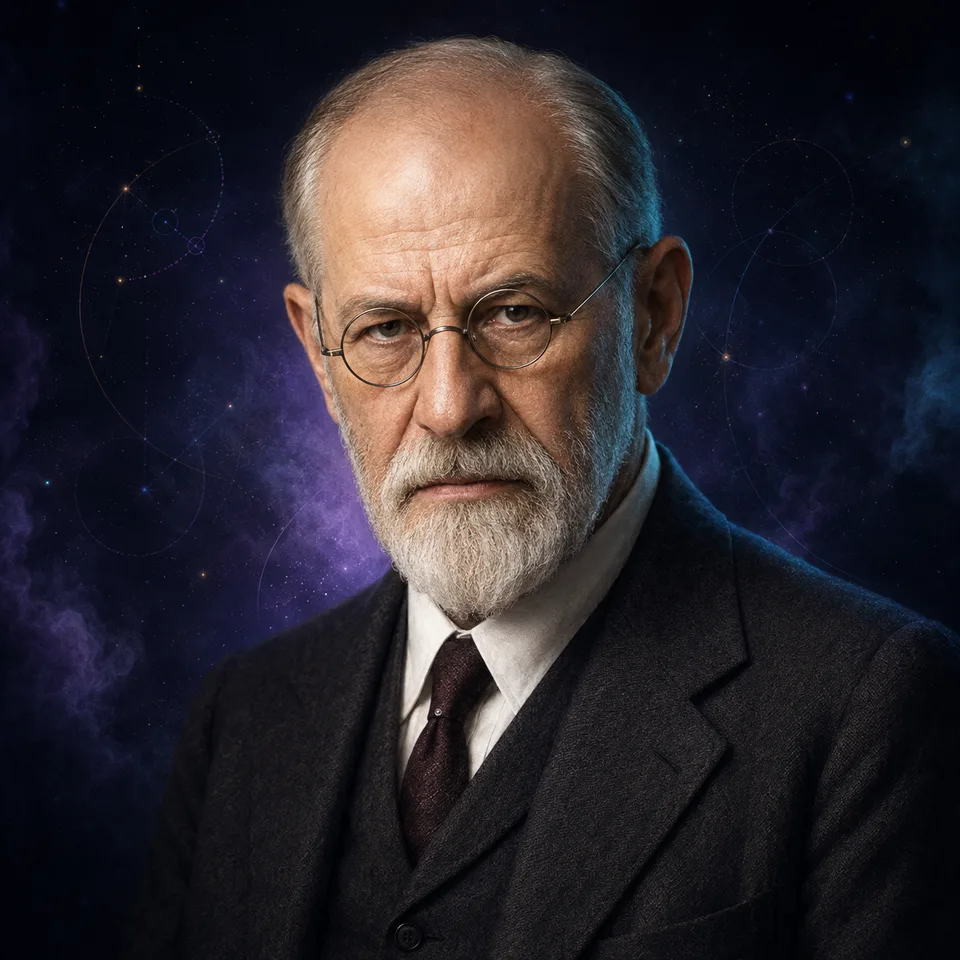
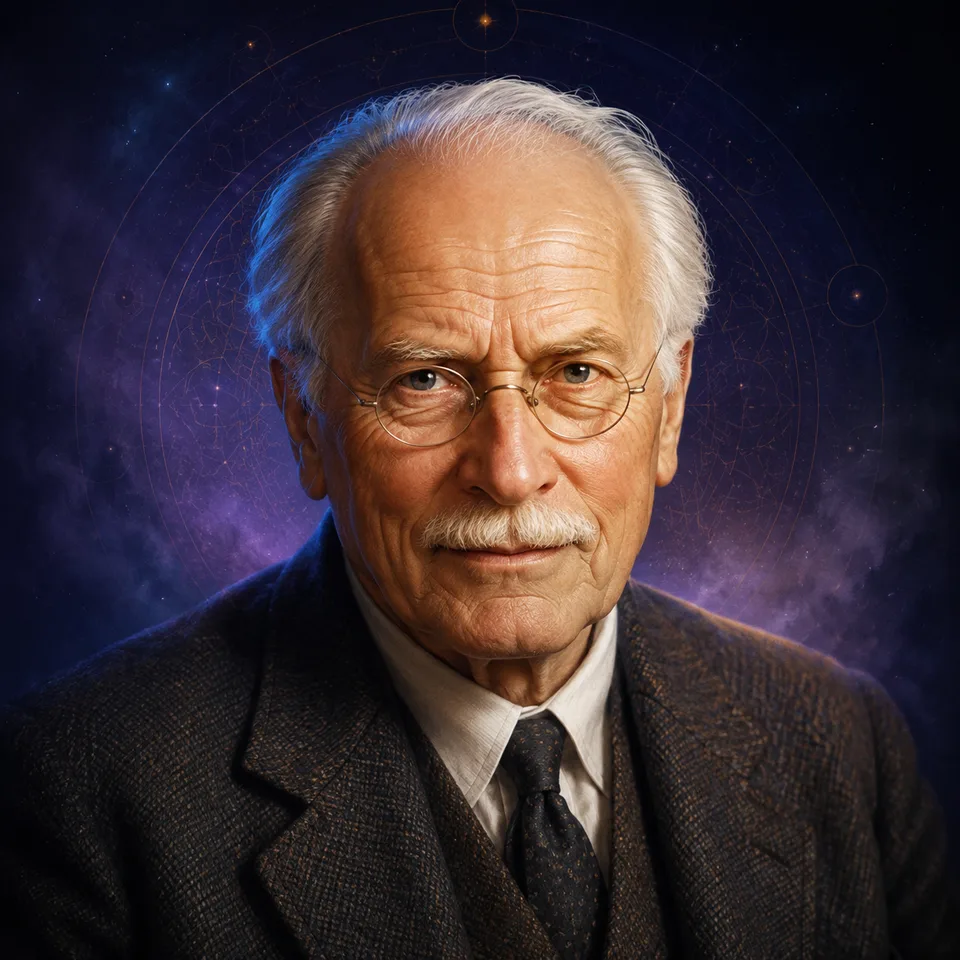
The theoretical frameworks of these thinkers provide foundation for this analysis:
✦ Key Dream Symbols Mentioned
In-depth psychological and historical interpretations of symbols featured in this article: